Google builds a different page for each intent
Two keywords in the same industry can get completely different Google pages. The difference isn't the topic, it's the intent behind the search. We broke down keyword intent across 9,734 Indian desktop searches to see exactly how.

Vaayam research | Data collected 26 September 2026 | Part 3 of a series
In our first two pieces, we showed that the ten blue links are mostly gone and that every industry gets a different Google. This post looks at a third variable that shapes a results page just as strongly: search intent. Whether a keyword is informational, commercial, transactional or navigational changes which SERP features show up, how often an AI Overview appears, and which features cluster together. We analysed 9,734 Google desktop searches in India (English) and sorted every keyword into one of four intent buckets to find out.
Key findings
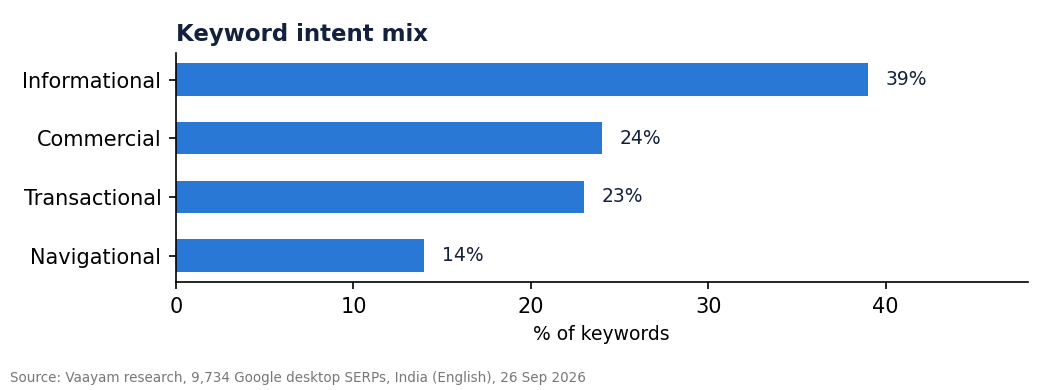
- Intent mix: 39% informational, 24% commercial, 23% transactional, 14% navigational.
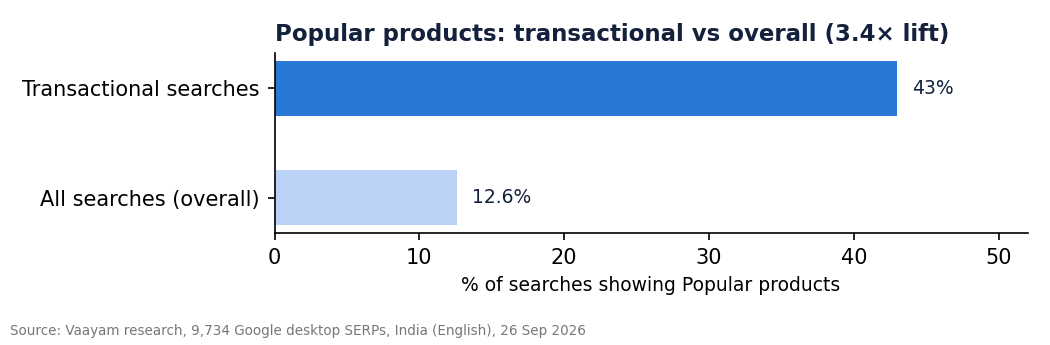
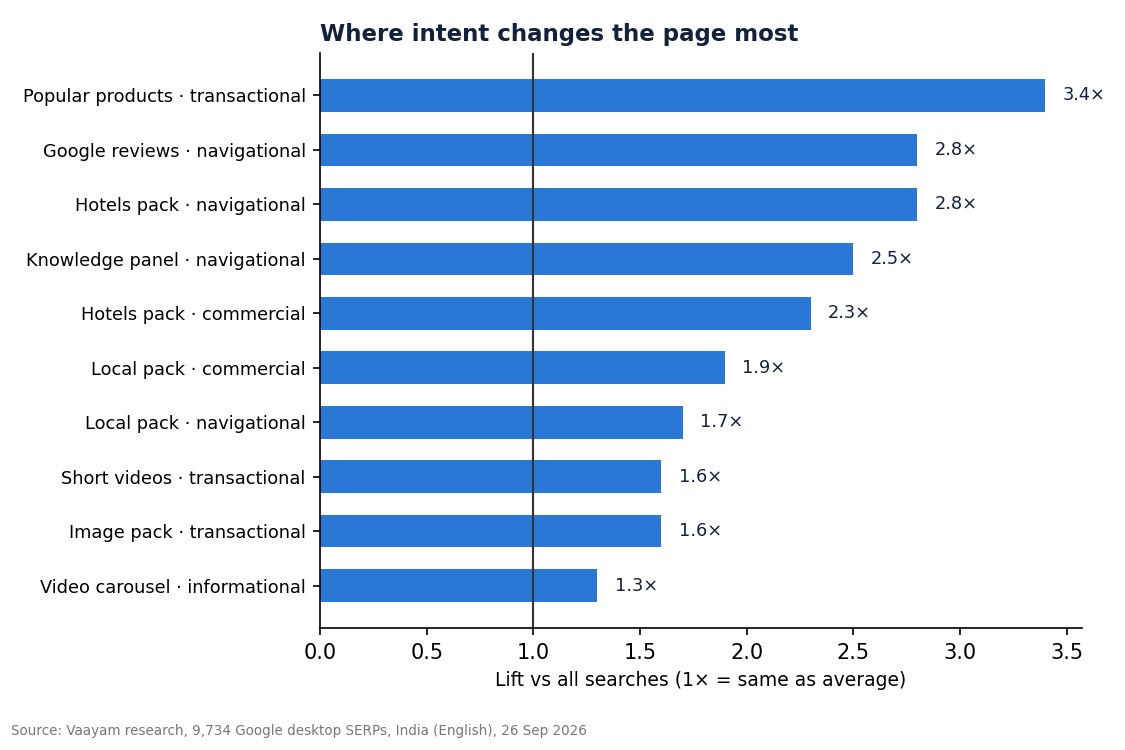
- Popular products is the feature most tied to intent: 43% of transactional SERPs vs 12.6% overall, a 3.4× lift.
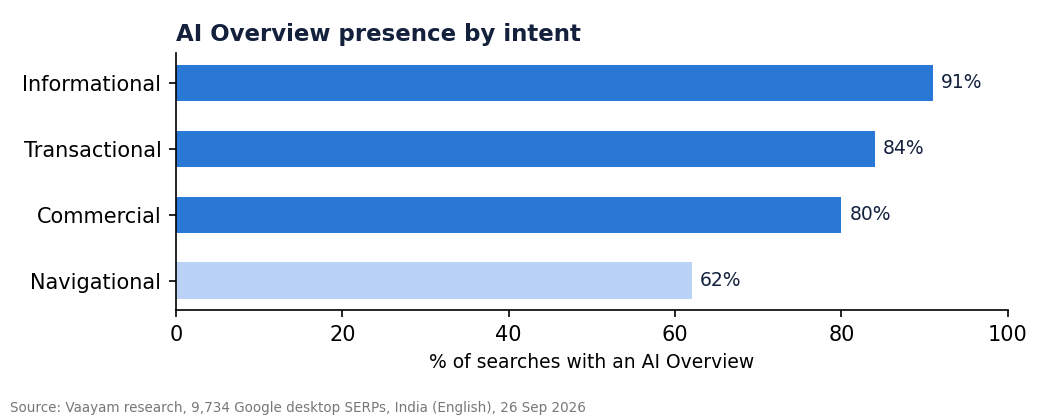
- AI Overviews follow intent: 91% of informational SERPs show one, against 62% of navigational ones.
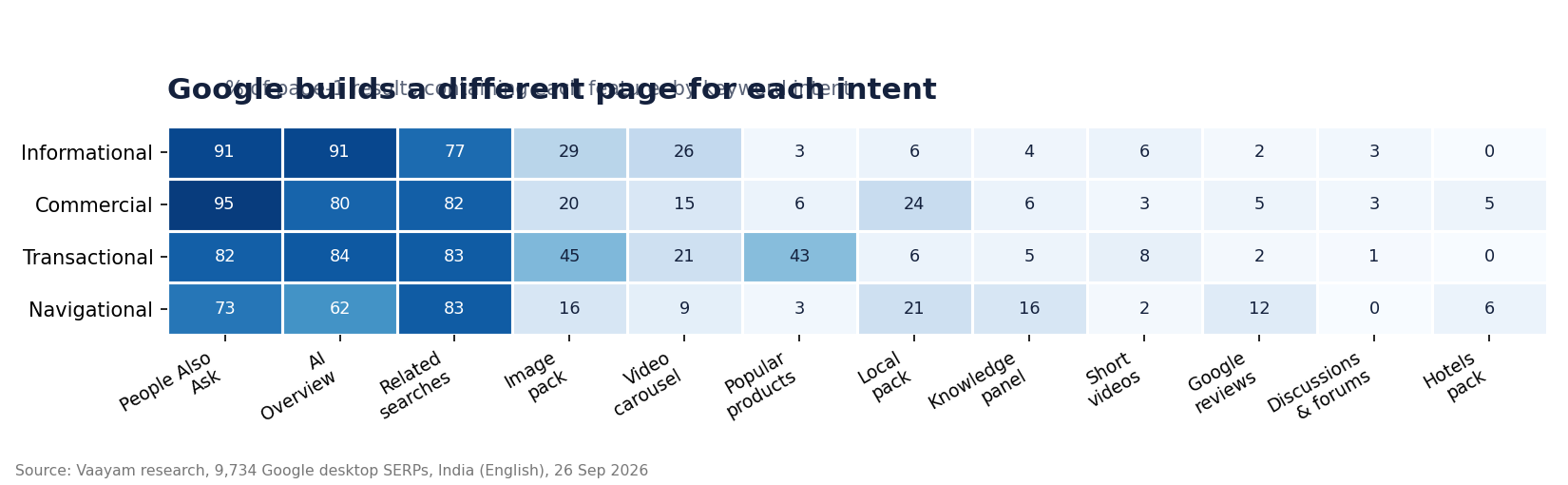
- Local pack peaks on commercial searches (24%); Knowledge panel and Google reviews peak on navigational searches (16% and 12%).
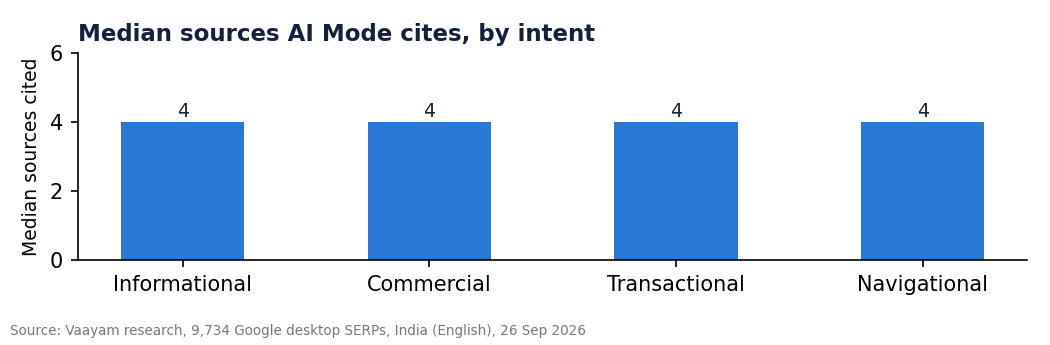
- Intent does not change how many sources AI Mode cites: the median is 4, for every intent.
1. Informational search intent still leads India's keyword landscape
Of the 9,734 keywords in our sample, 39% carry informational intent, 24% commercial, 23% transactional, and 14% navigational. That skew matters for SEO and content strategy: the majority of search demand in India is still people asking questions, not people ready to buy, but transactional and commercial intent together make up almost half of all searches, which is a bigger buying-intent pool than many teams plan content for.
2. AI Overview presence tracks intent, not just industry or query length
We've previously shown that AI Overview presence varies by industry and by query length. Intent tells a sharper story. 91% of informational searches show an AI Overview, as do 84% of transactional and 80% of commercial searches. Navigational searches, where someone is already looking for a specific brand or page, show one on only 62%. Google is least likely to insert an AI answer when someone has already told it exactly where they want to go.
3. Popular products is a transactional-intent signal, not a product-category one
Popular products is the single feature most strongly tied to intent (Cramér's V 0.50, the highest of any feature we measured in this dataset). It shows up on 43% of transactional SERPs, against 12.6% across all searches, a 3.4× lift. For ecommerce and retail SEO teams, this means the feature triggers on buying-ready language in the query, not merely on being in a shopping-adjacent category.
4. Every intent gets a differently shaped page
The full breakdown shows how far this goes. Local pack is most common on commercial searches (24%), the stage where someone is comparing options nearby. Knowledge panel (16%) and Google reviews (12%) peak on navigational searches, where Google has high confidence about which single entity the person wants. Image pack and video carousel both lean transactional and informational respectively. No two intents produce the same page.
5. Where intent changes the page the most
Ranking every feature-intent combination by lift shows the sharpest intent signals in the dataset: Popular products on transactional searches (3.4×), Google reviews and Hotels pack on navigational searches (2.8× each), and Knowledge panel on navigational searches (2.5×). These are the combinations worth building keyword-intent-specific content and schema around first, since they are the features Google reaches for well above its baseline rate.
6. AI Mode cites the same number of sources no matter the intent
One thing intent does not change: how many sources Google's AI Mode pulls into an answer. The median is 4 cited sources across informational, commercial, transactional and navigational searches alike. If you're optimising to be a cited source, the opportunity size per query doesn't shrink or grow with intent; only the type of feature competing for attention around it does.
What to do with this data
Tag your keyword list by intent, not just by topic or funnel stage, and map each intent to the features it actually triggers. Build Popular-products-ready content (clear pricing, specs, comparison tables) for transactional queries; build Knowledge-panel and review-friendly entity pages for navigational ones.
Searches for your own brand name are where Google reviews and Knowledge Panel do the most work. Keep your Google Business Profile, review volume and entity data current there first, since that is where the lift is highest.
Don't assume an AI Overview strategy covers all your keywords equally. 91% of informational queries show one versus 62% of navigational ones, so a content team optimising for AI citation should expect a different return by intent, not a flat one across the funnel.
Read the rest of the series
Part 1: The 10 blue links are almost gone — why only 4.8% of Google page 1s in India still show ten organic results.
Part 2: Every industry gets a different Google — how Feature Density and specific SERP features vary by industry.
Method and limits
Results are a non-personalised desktop snapshot for India in English on a single day, so individual users may see something different. Cramér's V and lift describe association, not causation; every finding here is a correlation.