Anatomy of a Google AI Mode answer in India : 267 words, 4 sources, mostly bullets
Everyone is optimising for AI Mode. Few people have measured what an answer actually looks like. We analysed Google AI Mode answers for 9,734 keywords in India to see how long they run, how they are structured, how many sources they cite, and whether ads have arrived.

Vaayam research | Part 7 of a series
Earlier in this series we showed that Google builds a different page for each search intent, that rankings only partly predict AI visibility, and that featured snippets have been replaced by AI-written answers. This post looks inside the answer itself. If you want to be cited by Google AI Mode, it helps to know what you are competing to be part of: the length, the format, the number of sources and the elements that show up in a typical answer.
Key findings
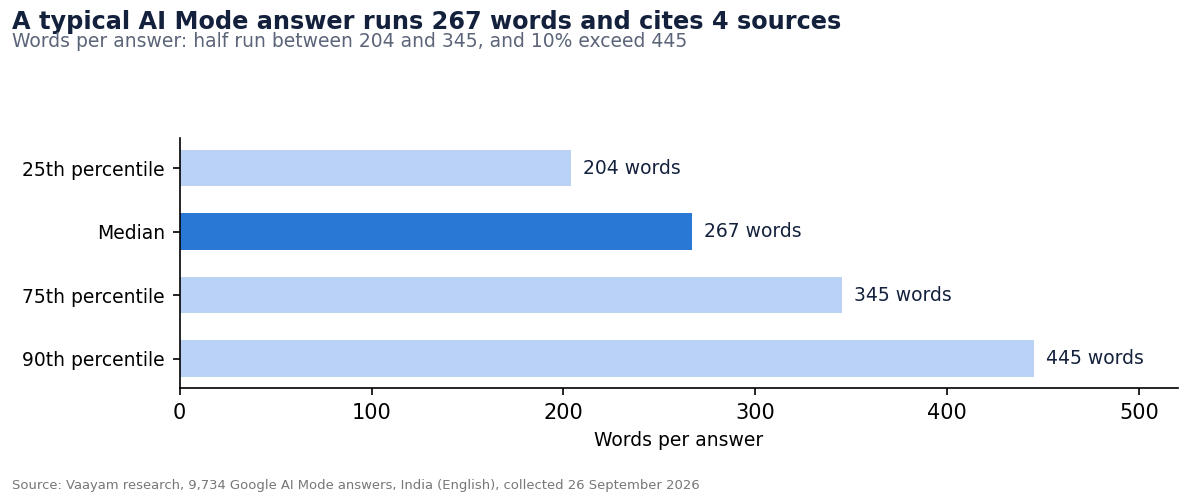
- The median AI Mode answer is 267 words. Half run between 204 and 345 words, and 10% exceed 445. Answers cite 4 sources at the median.
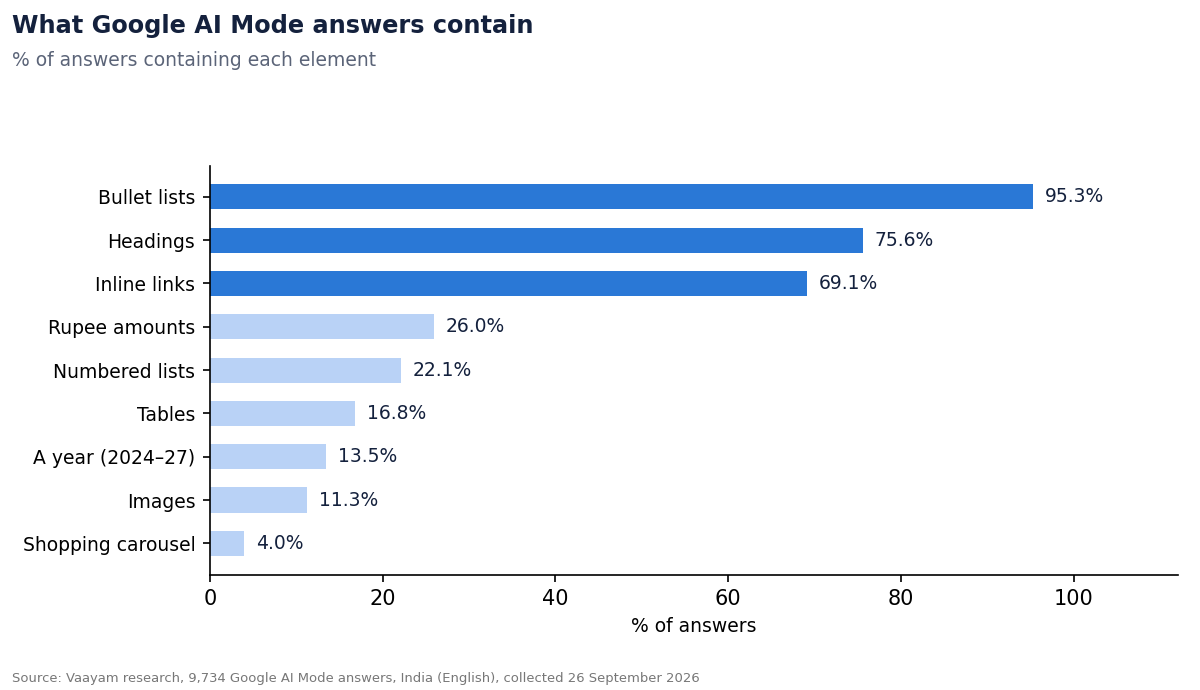
- Bullet lists appear in 95.3% of answers, headings in 75.6% and inline links in 69.1%. Rupee amounts appear in 26.0%, numbered lists in 22.1% and tables in 16.8%.
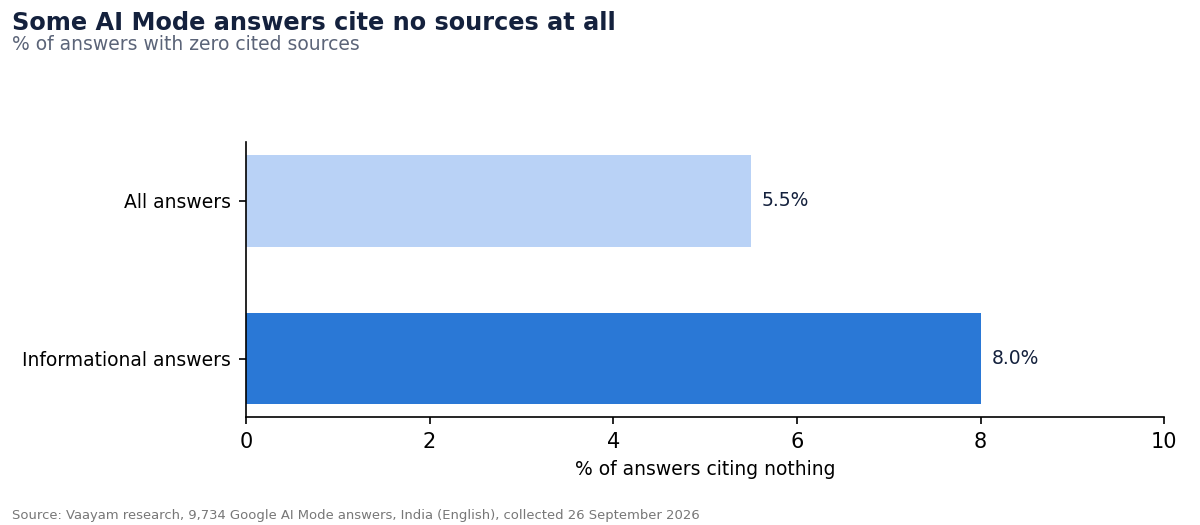
- 5.5% of answers cite no sources at all, mostly broad automotive terms such as "tyre pressure", "car ac repair" and "egr in engine".
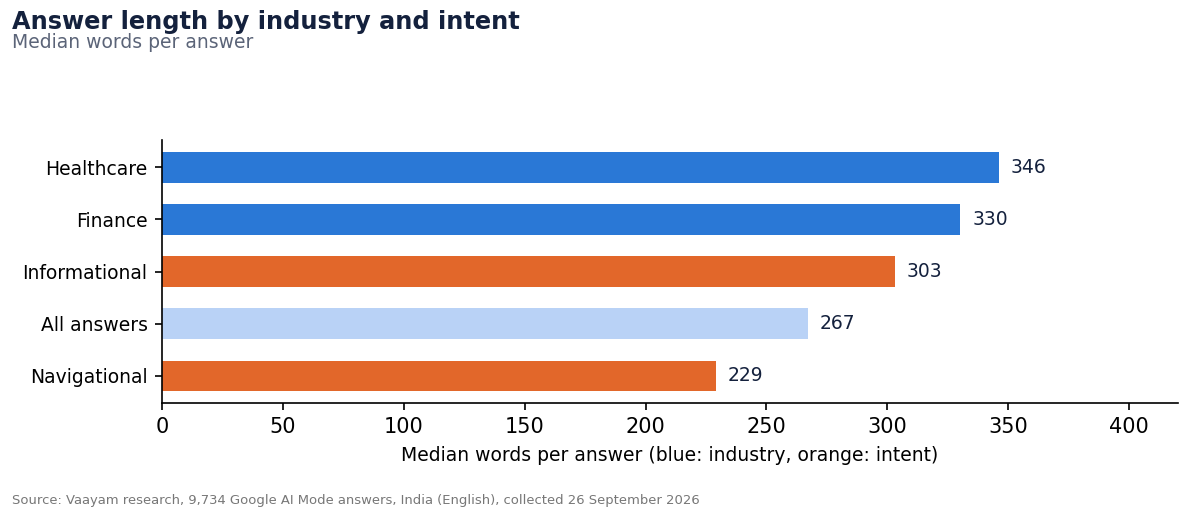
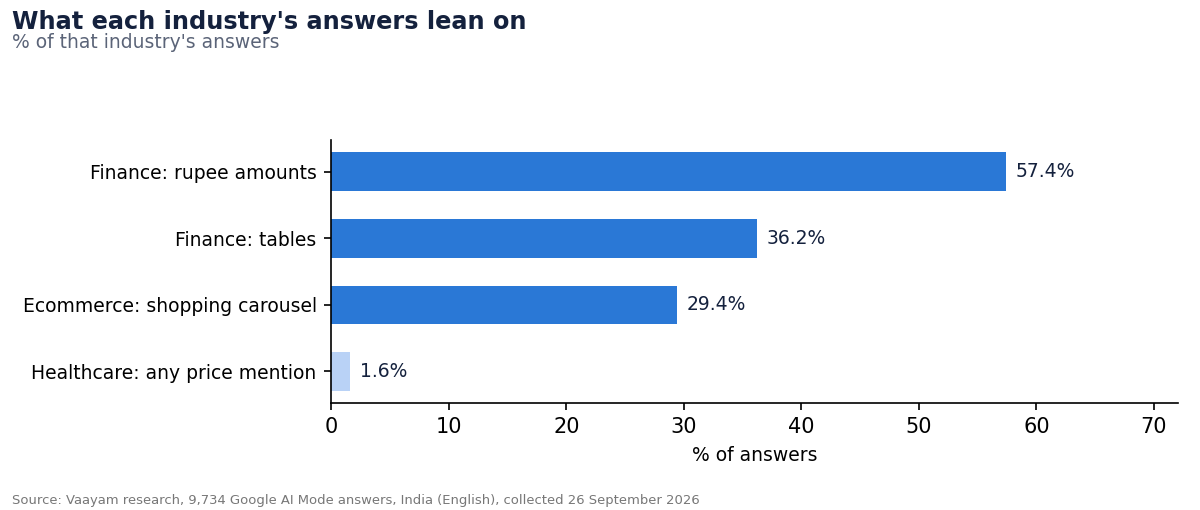
- Finance answers are the most data-heavy (330 words, tables in 36.2%, rupee amounts in 57.4%). Healthcare answers are the longest (346 words) and almost never mention a price (1.6%).
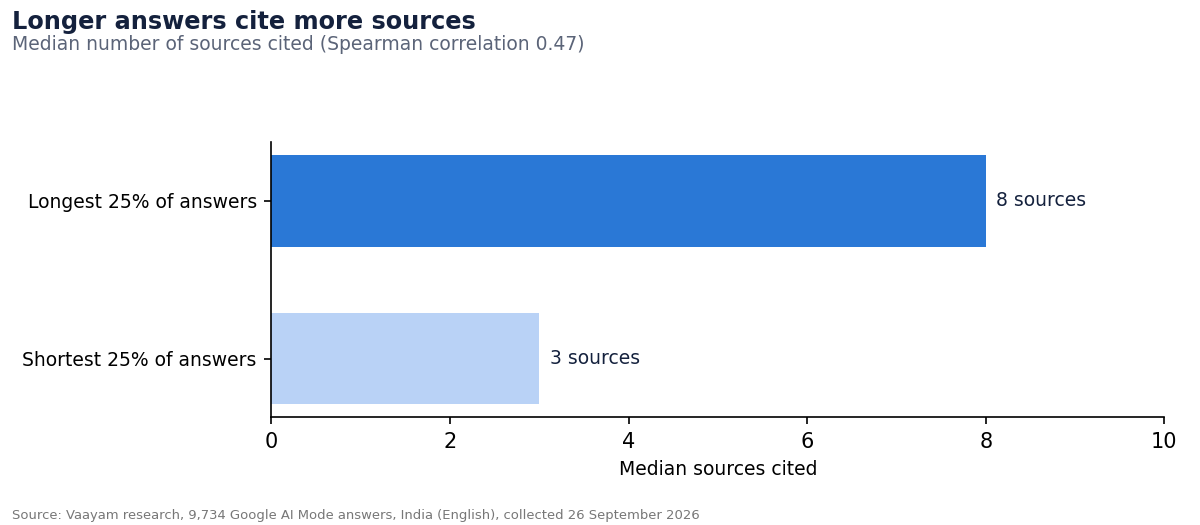
- Informational answers run 303 words against 229 for navigational ones, and longer answers cite more sources (8 at the median for the longest quarter, 3 for the shortest).
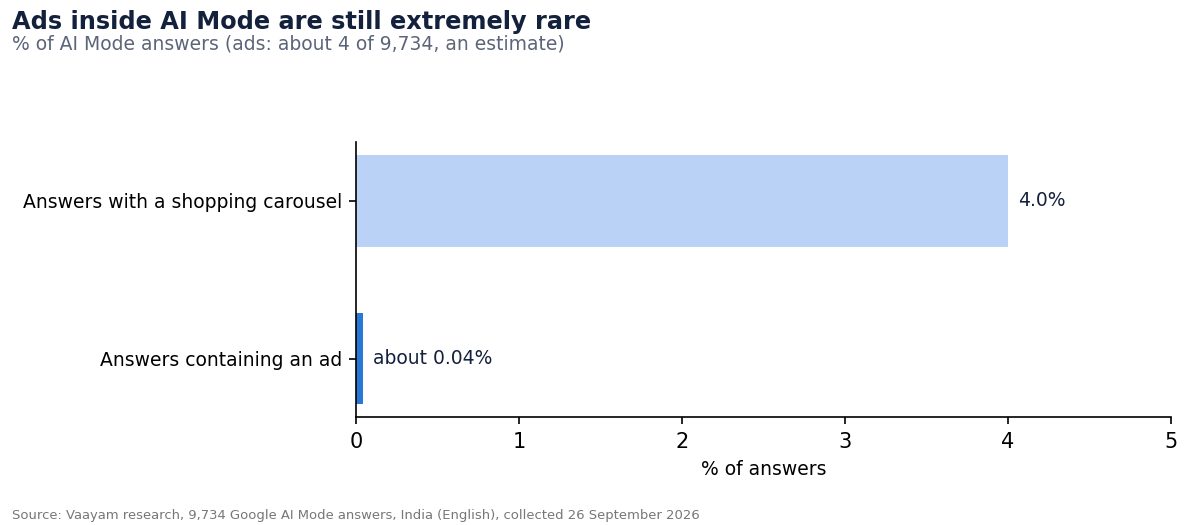
- Ads have appeared inside AI Mode, but only in about 4 of 9,734 answers.
1. How long is a Google AI Mode answer?
The median AI Mode answer in our India sample is 267 words, roughly a long paragraph or two short ones. Half of all answers fall between 204 and 345 words, and 10% run past 445 words. The median answer cites 4 sources. This is a useful target for anyone planning content meant to be quoted or cited: the answer is long enough to be a real summary, but short enough that only a handful of sources make it in.
2. What AI Mode answers contain: bullets, headings and links
AI Mode answers are highly structured. 95.3% contain a bullet list, 75.6% contain headings and 69.1% contain inline links. Numbered lists appear in 22.1% of answers and tables in 16.8%. Rupee amounts appear in 26.0%, a year between 2024 and 2027 in 13.5%, images in 11.3% and a shopping carousel in 4.0%. In practice, an AI Mode answer reads like a short, scannable briefing, not a block of prose, so content that is already structured into clear sections and lists is easier for the system to use.
3. Answer length changes with industry and intent
Healthcare answers are the longest at a median of 346 words, followed by Finance at 330. By intent, informational answers run 303 words, against 229 for navigational ones. That fits what people are asking: an informational question usually needs an explanation, while a navigational one often needs only a short pointer. If you write for health or finance topics, expect AI Mode to produce longer answers and plan content depth to match.
4. Every industry's answers have a signature
Finance answers are the most data-heavy. They contain tables in 36.2% of cases and rupee amounts in 57.4%. Ecommerce answers show a shopping carousel 29.4% of the time. Healthcare answers, despite being the longest, almost never mention a price (1.6%). For brands, this means the useful content for AI Mode differs by sector: current prices and comparison tables in finance, product data feeds in ecommerce, and clear explanatory text in healthcare.
5. Some answers cite no sources at all
5.5% of AI Mode answers cite no sources. These are mostly broad automotive terms, for example "tyre pressure", "car ac repair" and "egr in engine". Informational answers are the most likely to cite nothing, at 8.0%. Where AI Mode answers from its own knowledge, there is no citation to win, and the only route to visibility is outside the answer.
6. Longer answers cite more sources
There is a clear link between answer length and citations. The longest 25% of answers cite a median of 8 sources, against 3 for the shortest 25% (Spearman correlation 0.47). Topics that trigger long, detailed answers also create more room for citation, so competitive, information-heavy queries may offer more openings than short factual ones.
7. Ads inside AI Mode are still extremely rare
Ads have appeared inside AI Mode, but only in about 4 of 9,734 answers, around 0.04%, including "inventor software" and "erp software companies in india". For comparison, shopping carousels appear in 4.0% of answers. It is too early to build a paid strategy around AI Mode in India from this data, but it is worth watching for software and B2B queries.
What to do with this data
Structure pages the way AI Mode structures answers: Clear headings, short bullet lists and, where relevant, numbered steps and tables. Aim to answer the main question in a self-contained section of a few hundred words, with the key facts, amounts and dates stated plainly.
Match content to what your industry's answers lean on: In Finance, keep prices, rates and comparison tables current. In Ecommerce, keep product feeds and Shopping data accurate, since a carousel appears in 29.4% of answers. In Healthcare, depth and clarity matter more than price information.
Add AI Mode citation and answer presence to your reporting, and treat paid placement inside AI Mode as a watch item, not a budget line yet. These findings come from a one-day correlation snapshot, so test them against your own category before changing strategy.
Read the rest of the series
Google builds a different page for each intent — how informational, commercial, transactional and navigational searches each get a different page.
Do Google rankings predict AI visibility? — how organic rank relates to AI Mode citations.
Featured snippets are gone: Google's AI writes the answer now — where Google's on-page answers come from in India.
Method and limits
The dataset covers Google AI Mode answers for 9,734 keywords across 10 industries, captured on one day, 26 September 2026, for India in English on desktop. The capture is a non-personalised snapshot, so individual users may see different answers. Every finding is a correlation and none show causation.